Showing posts with label Houston Fotofest 2010 Biennial. Show all posts

Saturday, April 24, 2010

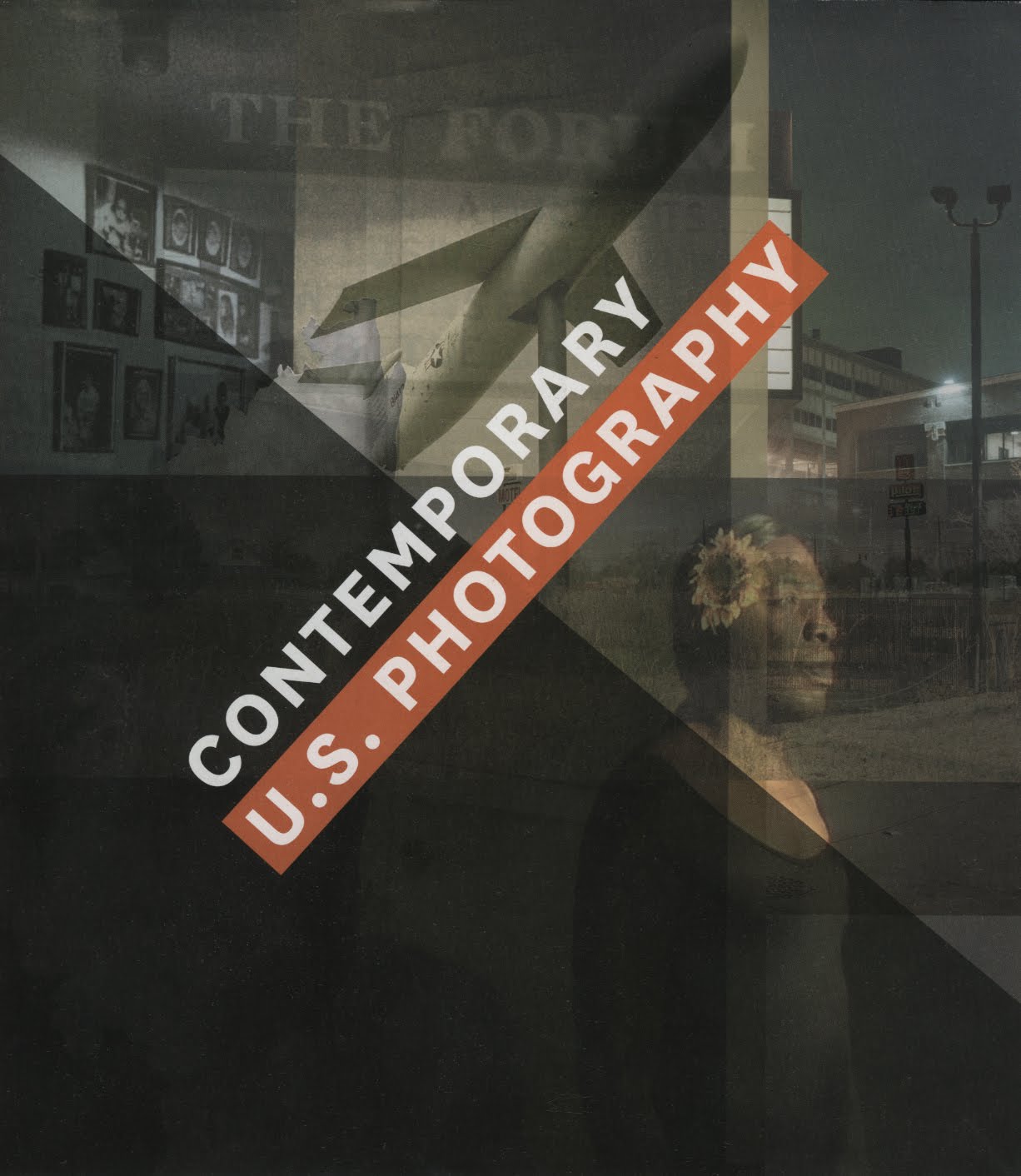
CONTEMPORARY U.S. PHOTOGRAPHY Catalogue


The FotoFest 2010 Biennial closes this weekend in Houston and what remains is a catalogue including five curatorial essays on the work in the exhibitions with an introduction by Charlotte Cotton.

The catalogue is available for purchase thru the FOTOFEST STORE and PHOTO-EYE BOOKSTORE.

Thank you to curator Aaron Schuman for his beautiful essay about the work in Whatever Was Splendid: New American Photographs. Four of my images (Bedroom, Teenage Boy, Couple Embraces, Winter Gas Station) were reproduced in the catalogue, and Aaron's insight into my own work was moving to say the very least.

Excerpt from Whatever Was Splendid: New American Photographs, page 38:

Finally, Tema Stauffer, who focused American masculinity and male adolescence in her portraiture series The Ballad Of Sad Young Men (2008), includes several such portraits within her broader and more extensive body of work: American Stills (1997-2009). Returning to the eclecticism of the first chapter of American Photographs, and under a similarly sweeping heading, Stauffer presents an assortment of sharply poetic observations of a country that at times can be angry, melancholy, brutal, and cold, but can also be enchantingly majestic and profoundly moving. Throughout the series there is a critical yet immensely forgiving sense of real compassion at work - a profound love for the subject, with all of its flaws - which strikes straight at the soul of the matter, in the most ordinary places and everyday moments. Rather than simply testifying to waste, selfishness, imminent collapse, and so on, Stauffer's Stills represent a truly committed and heartfelt attempt at unearthing the "splendid" from the "whatever" of contemporary America.

- Aaron Schuman

Wednesday, April 14, 2010

Douglas Britt reviews WHATEVER WAS SPLENDID for Houston Chronicle

Fotofest exhibit traces Walker Evans' legacy

One of the FotoFest 2010 Biennial's official exhibitions, Whatever Was Splendid: New American Photographs, explores parallels between Walker Evans' Depression-era photos and current lens-based U.S. work.

The unavoidable conclusion is that Evans casts a long, wide shadow over much of today's photography, luckily for us. It's not just that the nation has endured the worst recession since the period depicted in Evans' seminal 1938 book, American Photographs. It's that many of today's photographers — whose styles and subjects differ wildly from one another — are up to the same things Evans was, which isn't to say there's anything nostalgic about their work.

Aaron Schuman, founder of the online SeeSaw Magazine and the exhibition's curator, sets up the show by citing Lincoln Kirstein's introductory essay to Evans' monograph.

“(Evans) can be considered a kind of disembodied burrowing eye, a conspirator against time and its hammers,” Kirstein wrote. “Here are the records of the age before imminent collapse. His pictures exist to testify to the symptoms of waste and selfishness that caused the ruin and to salvage whatever was splendid for the future reference of the survivors.”

Photographers' eyes burrow through plenty of ruin today. For his Down These Mean Streets series, Will Steacy walks with a large-format-view camera from various cities' airports to their central business districts — always at night, with an emphasis on “neighborhoods you wouldn't want to be in at night; the parts of town you drive through — not to,” he says.

Steacy captures the signs of blight and neglect — a Philadelphia power plant looming over a crumbling neighborhood, a desolate Detroit housing project, the charred remains of a burned-out car in Los Angeles — with unwavering candor and, often, eerie beauty.
We see more thoroughly burned-out — and bombed and bullet-riddled — remains of cars in Richard Mosse's photographs following American soldiers in Iraq. And his photos and video of American soldiers lounging in the ruins of one of Saddam Hussein's former palaces — “whatever was splendid,” indeed — brilliantly straddle the line between wry humor and tragic grandeur.

Closer to home, Todd Hido burrows through ruin in the interiors of foreclosed suburban homes and, more dreamily, along rural roads, and Tema Stauffer's American Stills echo Evans' poetic portraits of everyday people and places.

More counterintuitive at first glance is Schuman's inclusion of work by Hank Willis Thomas and Jason Lazarus, both of whom work with other people's photographs to explore aspects of popular culture. But Schuman notes that American Photographs is “as much an interrogation of photography as it is of America, if not more so,” and Thomas and Lazarus update that exploration in fascinating ways.

For his Unbranded series, Thomas takes images from magazine advertisements featuring black Americans, often targeting them as consumers, and strips them of their copy and logos. His tactic highlights the stereotypes and assumptions behind the imagery. Because the same image can be disturbing, cheesy, poignant and hilarious all at once, the results are riveting.

Lazarus reversed Thomas' process, adding text instead of removing it while using amateur photos, not commercial ones. He asked various people, “Do you remember who introduced you to the band Nirvana?” and got them to write the answer with an anecdote on the back of a snapshot of that person. He then scanned, enlarged and framed the images and handwrote their responses on the prints' margins.

You might not think such a simple technique would pack much of a punch, but Lazarus' selection is unbelievably sweet — and often devastating. It shows how ordinary people, recording their memories, transform Nirvana's “well, whatever, never mind” mantra into something heartfelt, even splendid.

-Douglass Britt

Wednesday, March 31, 2010

Interview on GRAYPIGEON


Maria and Yasmine
Austin, Texas
December 2009

A short set of interview questions I answered over the course of a few winter nights in January 2010 for GRAYPIGEON was recently published on their site. GRAYPIGEON describes itself as a social networking site whose sole purpose is to bring together a collective of artists. The site is under transition and will be relaunched with a new name at some point in the near future.

Q&A

Why do you do what you do?

I write and take photographs in order to search for a meaningful understanding and expression of life experiences and to participate in a dialogue with a community of peers who share similar passions and values. Being wired for a creative path often feels like a condition or affliction – it is inescapable. I can’t imagine a life for myself outside of the arts.

What are the works you are most happy with? Why?

If I were to choose one image that best represents my photographs of American spaces, it would be the White Horse. I spent a week in the winter of 2007 driving around Florida swamplands chasing an elusive dream and felt like I actually captured it in that image. I think some of the qualities that exist in much of my work – the quiet tension, melancholy, mystery and beauty – come through vividly in this photograph.

More recently, I have primarily been shooting portraits – the young men in Binghamton in the fall of 2008 and other subjects I have found since in Texas, Michigan and New Jersey. I’m specifically interested in searching for people whose lives exist on an edge and exploring their expressions, emotions and stories.

What themes are hot on your mind right now?

Love, loneliness, vulnerability, uncertainty, sexuality, dreams, broken dreams, internal and external struggles.

You seem to have your hands in just about everything. Highlight some of the things you are up to besides making photographs.

I teach photography courses at William Paterson University in New Jersey and The School of the International Center of Photography in New York. In addition to teaching, I work as a curator for an arts website called culturehall founded by artist and curator, David Andrew Frey. culturehall is a curated online resource for contemporary art where selected artists can share their work with curators, gallerists, collectors and other artists. My role has been to invite artists, feature and write about their work, and build our list of resources that includes international blogs, websites and organizations devoted to the arts. The goal of the site is to build a sense of community amongst artists, promote their exhibitions and events, and provide greater exposure for their work. It’s a great job for me because I thrive on developing relationships with other artists and supporting work that I think merits attention. I also participate in online discussion of the arts and share personal work-in-progress through my own blog, PalmAire.

Why do you teach? Does it help you as an artist?

Teaching is one of the most rewarding ways I can make a living in the arts. I love teaching. Teaching is about communicating ideas and forming relationships with students. It gives my life more structure and purpose. It motivates me to be more informed, organized and articulate. I like the kind of conversations that transpire in critiques, and it is satisfying to watch students develop an enthusiasm for photography and grow in their work.

How would you describe the process through which a talented young artist achieves professional and financial success? Is that even the goal?

Professional success, understood as visibility and accomplishment in the art world, doesn’t necessarily lead to financial success. Most of my peers, even those who have achieved some substantial recognition for their work, are still struggling to make a living as artists. As far as I can tell, professional success comes from a combination of talent, hard work, commitment, perseverance and a supportive community. Financial success is exceptional. Artists who recognize and utilize the power of the Internet as a forum for networking, promotion and creative expression are probably more likely to receive exposure and succeed in their careers.

I recently finished reading the biography and journals of John Cheever which describe the financial challenges of one of America’s great writers even while his stories were regularly being published by The New Yorker. Making art tends to cost more than writing, and many visual artists whose work is shown in respected galleries often spend more on the expenses of producing work than they receive from sales of the work, especially during the current economic climate.

Developing a career in the arts is a tough path and one that requires a great deal of sacrifice and endurance. The majority of artists I know support themselves through teaching or other jobs related to the arts – and those jobs are competitive as well.

Any gallery shows or events you’d like to talk about?

I will be exhibiting thirteen photographs – made from 1997 thru 2008 – in a group show called Whatever was Splendid at the Houston Fotofest Biennial opening in March 2010. The show, curated by Aaron Schuman, explores the influence of Walker Evans on contemporary American photographers. Walker Evans has been a significant figure in shaping my understanding of who and what is worth photographing, and it will be interesting to have my work viewed in that context. Other participating photographers include Will Steacy, Michael Schmelling, Greg Stimac, Jason Lazarus, Jane Tam, Richard Mosse, Craig Mammano, Todd Hido, Hank Willis Thomas and RJ Shaughnessy.
Monday, March 15, 2010

Telegraph features WHATEVER WAS SPLENDID

Telegraph (UK) features WHATEVER WAS SPLENDID: NEW AMERICAN PHOTOGRAPHS, curated by Aaron Schuman. The feature closes with this powerful commentary:

As much as Evans’s precedent has provided both the inspiration and reinforcing framework for this exhibition, WHATEVER WAS SPLENDID is first and foremost the manifestation of the intelligence, ingenuity, and multiplicity of voices and visions that can be found within current US photographic practice. Yet consciously or not, all the photographers represented here have, in their own distinct ways, expanded upon many of the themes, strategies, clues, symbols, ‘certain sights, [and] certain relics of American civilization past or present’ first glimpsed in American Photographs. They all inherently possess a somewhat familiar ‘burrowing eye’, and share a determination to record, testify, and salvage what they can of their own precarious age for its survivors. And just like Evans, they have both reinvigorated American photography and redefined their country—conceptually, aesthetically, culturally, politically, historically, photographically, and so on—within very contemporary terms, celebrating both the United States and its photography, as Kirstein put it, ‘with all [its] clear, hideous and beautiful detail, [its] open insanity and pitiful grandeur.’

Please see the full feature: Whatever was splendid: New American Photographs

And a slide show of selected works from participating photographers: Whatever was splendid: slideshow

Aaron Schuman has kindly sent me shots of the installation of some of the work that I contributed to the exhibition.


Saturday, March 13, 2010

Arriving from Texas ...


While I was home emailing my pen pals and trying not to feel too terrible about the fact that I couldn't make the trip to Houston for the opening of Fotofest last night on account of my often terrifying state of being financially stuck, I received this very sweet and pretty hilarious snapshot of the installation from photographer Carolyn Monastra. In between the women on the bench and the gang at the Minnesota State Fair on the wall, that is photographer Dana Miller on the left, who I met and exhibited work with along with Mara Bodis-Wollner in the inaugural opening of Jen Bekman Gallery in 2003. Keep your fingers crossed for me that my life can become less virtual one of these days.

Friday, March 12, 2010

Houston Fotofest 2010 Biennial


Thirteen photographs I made between 1998 - 2008 are included in an exhibition at Vine Street Studios, one of five exhibitions in the Fotofest 2010 Biennial in Houston, Texas opening tonight. Whatever Was Splendid: New American Photographs explores the legacy and continued influence of Walker Evans on contemporary American photography. The exhibition was curated by Aaron Schuman - a photographer, writer, lecturer, curator and founder/editor of SeeSaw Magazine. Other participating artists are Will Steacy, Michael Schmelling, Greg Stimac, Jason Lazarus, Jane Tam, Richard Mosse, Craig Mammano, Todd Hido, Hank Willis Thomas and RJ Shaughnessy.

Also at Fotofest is an exhibition, Road to Nowhere?, including work by one of the contemporary photographers whose spirit I admire the most, Victoria Sambunaris. I had the opportunity to meet Vicky earlier this fall before she left on a long journey to make new photographs in the southwestern region of the United States which finally winds down in a couple of weeks. Her beautiful and politically-charged images of the American landscape will be shown along with work by an exceptional group of American photographers: Sheila Pree Bright, Jeff Brouws, Tim Davis, Myra Greene, Eirik Johnson, Jason Lazarus, An-My Le, Nic Nicosia, David Oresick, Trevor Paglen, Greta Pratt, Michael Robinson, Jason Salavon, Christina Seely, Paul Shambroom, Greg Stimac and Brian Ulrich. Road to Nowhere? was curated by Natasha Egan, Associate Director and Curator of the Museum of Contemporary Photography in Chicago.

For a complete list of Fotofest exhibitions, please see: Fotofest 2010 Biennial