Showing posts with label The Ballad of Sad Young Men. Show all posts

Saturday, April 24, 2010

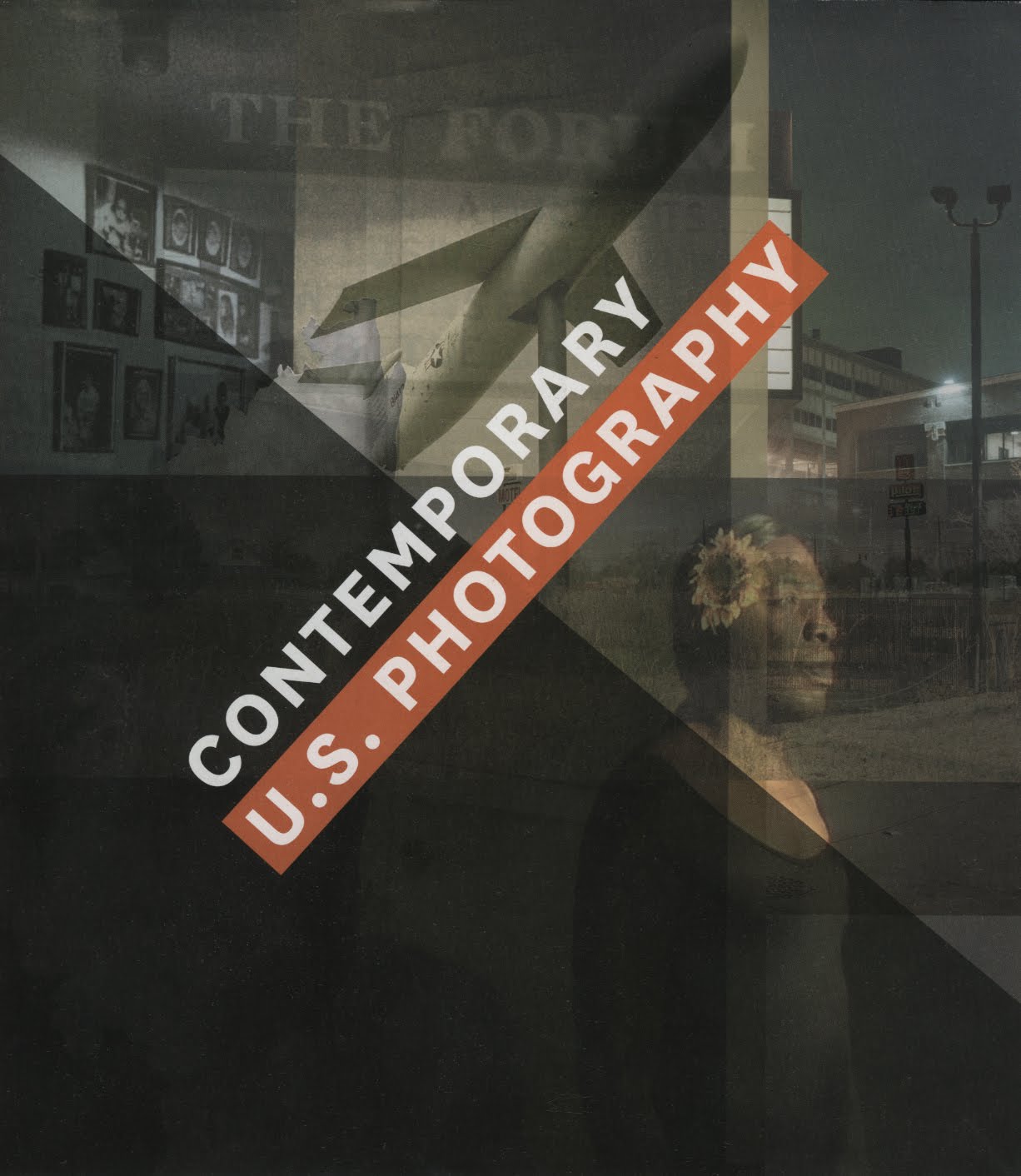
CONTEMPORARY U.S. PHOTOGRAPHY Catalogue


The FotoFest 2010 Biennial closes this weekend in Houston and what remains is a catalogue including five curatorial essays on the work in the exhibitions with an introduction by Charlotte Cotton.

The catalogue is available for purchase thru the FOTOFEST STORE and PHOTO-EYE BOOKSTORE.

Thank you to curator Aaron Schuman for his beautiful essay about the work in Whatever Was Splendid: New American Photographs. Four of my images (Bedroom, Teenage Boy, Couple Embraces, Winter Gas Station) were reproduced in the catalogue, and Aaron's insight into my own work was moving to say the very least.

Excerpt from Whatever Was Splendid: New American Photographs, page 38:

Finally, Tema Stauffer, who focused American masculinity and male adolescence in her portraiture series The Ballad Of Sad Young Men (2008), includes several such portraits within her broader and more extensive body of work: American Stills (1997-2009). Returning to the eclecticism of the first chapter of American Photographs, and under a similarly sweeping heading, Stauffer presents an assortment of sharply poetic observations of a country that at times can be angry, melancholy, brutal, and cold, but can also be enchantingly majestic and profoundly moving. Throughout the series there is a critical yet immensely forgiving sense of real compassion at work - a profound love for the subject, with all of its flaws - which strikes straight at the soul of the matter, in the most ordinary places and everyday moments. Rather than simply testifying to waste, selfishness, imminent collapse, and so on, Stauffer's Stills represent a truly committed and heartfelt attempt at unearthing the "splendid" from the "whatever" of contemporary America.

- Aaron Schuman

Thursday, February 19, 2009

Thank you ...

Our show opens tonight! And it is time to give thanks to the people who made it happen:

Thank you to my friend and soulmate, Anthony, who provided some inspiration for this series and who flew out from Minneapolis to celebrate his birthday and to join me at the opening.

Thank you to Daniel for believing in this work and for giving me the opportunity to exhibit this series in a his amazing gallery. And thank you to Brett for introducing me to Daniel.

Thank you to Francesca for sharing this experience with me and for being so awesome to communicate with along the way.

Thank you to Alex for her friendship and pep talks. Thank you to Jonathon for his friendship and tech support. Thank you to Emily for her friendship, writing and insight.

Thank you Matt for the passion and enthusiasm he brings to his blog and my own and for the advice when it comes to matters of the heart.

Thank you to Kiko, whose teenage years were inseparable from my own and whose friendship remains for life - thank you for contributing to the production of the work.

Thank you to Keith at Laumont for his hard work and patience in making the exhibition prints.

Thank you to Ruben for his energy and enthusiasm and for the efforts he has made to understand and to support this series.

Thank you to Cara and Amy of WIP and Nina of Nymphoto for the efforts they have made to support my work and the work of women in photography.

Thank you to my parents for their love, support, faith and guidance.

Thank you to Barbara and her mother, Donna, for sharing their home and their hearts with me in Binghamton.

And thank you to the young men in Binghamton - Jacob, Jonathon, Johan, Justin, Matthew, and David - who gave a part of themselves and their stories to these photographs.

Thank you all for making this possible.

Monday, February 16, 2009

Interview with Ruben Natal San-Miguel

I was recently interviewed by art collector and blogger, Ruben Natal-San Miguel, for his interview series, The Current State of the Art Market, which investigates how artists and figures in the art world have been impacted by the economic crisis. You can find the interview below or a more colorful and illustrated version on Ruben's blog: Ruben and Tema on ARTmostfierce

Ruben Natal San-Miguel - This is your first show in the Chelsea Gallery district @ Dan Cooney alongside Francesca Romeo … Congratulations! How do you feel about it?

Tema Stauffer - I am excited and honored, to say the least. It is a big moment for me.

RNSM - Please tell us about your Binghamton, NY portrait photography series? What inspired you? Why Binghamton? Why Young Men only? Why Upstate NY?

TS - In July, I got involved in a relationship with a musician who lives in Binghamton, NY. She grew up in Binghamton and she has lived there most of her life. I started making bus trips to visit her, and as we drove around her hometown, I was moved by Binghamton on a number of levels. For one thing, it evoked my own experiences growing up in a small city in the Midwest. It had its own unique soulfulness, but also seemed iconic of any number of towns across America with old brick buildings and new strip malls and an economy on the decline. I recognized its potential as a setting for a story I wanted to tell, and I watched its characters unfold from the window of her car, but it wasn’t immediately clear to me what that story would be.

At the end of the summer, I had a conversation with a close friend, a gay man in his mid-forties, who was preparing to teach a workshop in a theatre department at school in Minnesota. He described an assignment he had given his students to create musical performances based on songs that resonate with “our stories, our past, our hopes, our fears and our losses.” The song that my friend had chosen as an example for himself was “The Ballad of Sad Young Men" - a song that has had historical relevance to the gay community as a melancholic reflection on the pain and uncertainty of adolescence.

I began to think about how the song related to both my friend’s and my own struggles as gay teenagers, as well how it expressed something universal about the vulnerability and intensity of that period of life for everyone. I also had been conscious for years that I wanted to make work that addressed themes of gender and sexuality, but I hadn’t determined a clear way to approach these subjects. I had previously shot video footage of men at rodeos in New Jersey and New Orleans, but that work never arrived at a finished art piece. I also took a photograph of a striking teenage boy at a swimming hole in Austin, and what was revealed in that image – something sexy, rebellious, uneasy and haunting – influenced my motivations for photographing these young men in Binghamton.

The easiest way to explain why I chose to photograph young men is that I wanted to create a very specific structure in the concept of a project because one of the biggest challenges for me has been to give myself enough structure to know what I was searching to photograph. I decided to remain in one town, in proximity to one street, to photograph one gender, and to search for young men who resembled a kind of character I had envisioned. I stuck literally to the notion of “sad young men” despite inevitably wondering at times while I wasn’t photographing young women as well. I told myself, if I saw a young woman who seemed relevant to this kind of character, I wouldn’t stop myself from approaching her, but it didn’t happen.

The other part of the explanation for why I chose to photograph young men has to do with my own fascination with masculinity. My earliest memories of childhood involve feeling at odds with the expectations of being a girl and rejecting those expectations at every turn. I felt a longing to be a boy and I was drawn to symbols of masculinity like cowboys and motorcycles. My friends were boys and tomboys, and I had no interest in anything “girly.”

These feelings of being uncomfortable with the conventions of femininity got even more intense and complicated when I reached adolescence and began to understand that I was gay. Once I actually got involved in relationships with women after I left my hometown and went to college, I stopped longing to be someone or something else and began to grow into myself as a gay artist who could carve out an identity and a life outside of the conventions of traditional gender roles. Now, I like the androgyny in myself and I like it in other people.

My attraction to the youthful masculinity of these subjects is an attraction, but it is an attraction altogether different from the emotional, intellectual, sexual attachments I develop for grown-up women. And if you look carefully at these young men whom I choose to photograph, I think there is an androgyny present in some of them as well – a softness – even when they are trying to look tough.

RNSM - How did you meet Dan Cooney? Did you know that he is originally from Binghamton?

TS - I met Daniel Cooney through a reference from my friend, Brett Bell – a wonderful young gay artist who had asked me to participate in the committee for his MFA review at Parsons in August. Daniel had taken an interest in Brett’s work and had invited Brett to contribute a photograph to his first Emerging Photographer’s Auction this past fall. When Dan and Brett met to select Brett’s piece for the auction, Dan asked Brett is he recommended other artists whose work he should consider, and Brett mentioned my name among others, and then called later to encourage me to send work to Dan. I have since discovered that Dan actively makes a point of asking artists for insight about other artists - which I think is great way to search for work, and says a lot about how much Dan respects the emerging arts community.

When I sent a link to my website and blog to Dan, he wrote back immediately. Having noticed the first couple of portraits I had posted on my blog of young men in Binghamton, he asked, “What the hell were you doing in Binghamton, the place of my childhood??!” I think we both found it both funny and uncanny that I had been shooting young men in his hometown, and I met him at the gallery shortly thereafter. The following day, he wrote to ask if I might be able to bring this project, which was in its very early stages, to a point where it could be exhibited along with Francesca Romeo’s work in February, and of course I said yes.

I am grateful to Dan not just for providing me this opportunity for an exhibition, but for having faith in the idea of what I was trying to do and what I might accomplish. His enthusiasm and encouragement were integral to motivating me to make the work this fall, and the chemistry and communication between us felt natural and open throughout.

RNSM - Do you think your Binghamton series are in some way reflecting, documenting, or a demonstration of the current economic times we are experiencing now?

TS - I started shooting these photographs of young men shortly before the market crashed in September. As my fears grew in the following weeks along with the rest of the world’s with the news becoming more grim each day, I felt a greater sense of urgency to be connecting to people, photographing people, understanding what people were experiencing during this anxious time. At that point, I also made the decision to remain on or near Binghamton’s Main Street in my search for young men, to give the portraits the context of this literal space that was becoming a metaphor in the media for middle and working class America.

Since I had already embarked on the idea of photographing these young men, many of who were clearly struggling economically, I made a point of asking some of them about their anxieties and their search for work. A number of young men talked about the difficulty of finding jobs and how they had walked along Main Street asking about work in the various establishments with no success in landing jobs.

The subject with whom I talked at greatest length and who is pictured twice in the exhibition, Jacob, immediately opened up to me about his struggle to find work as a construction worker or anything else, and I sensed his anxiety and discouragement, which was heart-breaking. Before we parted after I shot the first portrait of him in a green doorway on Main Street, I suggested to him to set up a free email account at the library and explained to him how to search for jobs on the Internet, and I received an email from “Joker B” the following week – “hey tema its jake.” He made my day with that message.

Throughout the fall while I was shooting this work, my own income in New York was deteriorating rapidly with the collapse of the economy. I was, and still am, in a difficult place in regard to making a living, so these anxieties and pressures were constantly part of my consciousness while shooting this project and preparing for the exhibition.

RNSM - How do you feel as an artist showing your work in these turbulent times in a gallery?

TS - These turbulent times feel like the perfect time to show my work. I mean that because this work is about people who are struggling, or who are marginalized in some way, or who are rebelling against conservative and mainstream forces in America. It is an exceptional, painful, fascinating moment in American history, and I am grateful to have even a small voice in the dialogue.

Of course I recognize that this is a harder time for galleries to sell work in the current art market. While those considerations are very real and important to my survival, and to the survival of artists and galleries in general right now, the single most important driving force behind my desire to exhibit this work is for it to be seen and to be felt. I also think that the exhibition it is a great step forward for me with an excellent gallery.

RNSM - I read several of your blog posts in Palm Aire and was mesmerized by how you came across your portrait models and the stories behind them … How did you get started? Were you scared? How did you make a connection with the subject? Did anybody refuse to be part of the project? Please tell us.


TS - There was nothing intimidating about approaching these young men in Binghamton. The worst thing they could do was say no, which happened in just a few instances. During my trips to Binghamton, I spent many weekdays driving up and down Main Street searching for subjects. When I saw someone compelling, I simply got out of the car and introduced myself as a photographer from New York City who was working on a project shooting portraits of young men on Main Street in Binghamton. I told them I was planning to show these photographs in an art gallery in February once I was aware of the exhibition. I was happy to discover how open and willing so many of these young men were to participate in being photographed. I think many of them were flattered to be noticed and to have someone ask questions about themselves.

RNSM - Is this portraiture series a departure from your previous body of work?


TS - As I mentioned above, I created a tighter structure for this project. The work I had been shooting for the past few years which falls into my ongoing American Stills project explores the psychological character of American spaces – mostly images of landscapes and interiors in the Midwest and more recently, the West. This series of portraits shares this same kind of distinctly American setting, but it is its own body of work. While I had been shooting some portraits during these previous trips, I hadn’t been focused on a specific type of person in a single location.

RSNM - Are any of your portrait models coming to the opening?

TS - I recently sent messages to the subjects for whom I have email addresses. I told them about the opening and the exhibition and gave them links to my website and Dan’s website. I also told them that if they were interested in coming to the gallery at any time during the exhibition, I’d be happy to take them to the gallery. I haven’t heard back from anyone yet. Partly, they don’t check their email as often as you or I do. Also, it is hard to know what is happening in some of their personal lives. I imagine that New York might seem inaccessible to many of them.

RNSM - Do you think that by recognizing, documenting and for a brief moment of time, being in contact with these young men, you were able to inspire and influence their future in any way?

TS - I don’t want to overstate any influence I had on these young men. The time we spent together was brief – even if poignant in some way. It is unclear at this point how much contact I will have with any of these young men in the future, though I certainly hope to stay in touch. Perhaps I will even photograph some of them again.

RNSM - I had seen most of the portraits and there is so much vulnerability and defiance expressed in them … was that your main purpose … to show a diamond in the rough sort of speaking?

TS - I think you said it well, Ruben. It was this combination of roughness and vulnerability, defiance and tenderness that I was looking for in my search for subjects. I only took photographs of young men I thought I’d like as people – guys who seemed sensitive on some level. Daniel mentioned in his press release that there is a “sexual tension” that surface in the exchange between the photographer and the subjects. Well, if there is a sexual tension, which I think there is in some cases, that tension is purely about the relationship created between my role as a photographer and them as subjects expressing themselves to the camera. On simply a personal level, I felt more like an older sister would feel towards a younger brother.

RNSM - As a Juror from Photolucida’s Critical Mass 08, your were one of my finalists 50 choices … the body or work shown there was so different than this series … I must tell you this series which I think elevates your work to a higher level! Can you tell us a bit about that experience?


TS - I am still invested in goal of making work in the vein of my American Stills series. But the biggest challenge for me is finding the resources to travel for any length of time, and it has made the progress of that work move slowly. I’d like to have longer stretches of time to travel and to explore these charged American spaces in the West, but it is difficult to afford that kind of wandering at this point.

RNSM - Are you planning to continue this series in another part of the USA? I mean the Americana feel to it is so strong … If so, why?

TS - I hope to continue shooting portraits of young men in Binghamton. But I always hesitate to talk too much about future plans, because life is so complicated and unpredictable, especially right now. I don’t know what I can do or will do until I am closer to doing it. I prefer to talk, or even better, to write about experiences after they have happened.

RNSM - Do you feel that the average eye will relate to these portraits in the same way as a sophisticated art collector? How? Why?

TS - I don’t know that there is such a thing as an average eye. Everyone brings their subjective experiences to looking at photographs. But I do think that these images are relatively accessible to people who don’t necessarily have an education or background in the arts. I mean that because they are portraits and they are straightforward and classical in some ways.

RNSM - Your work is different that Francesca Romeo but there is something that binds them together … what do you think it is? Why?

TS - I think Francesca and I share an attraction to people who are on some kind of an edge. And I think we both bring a sense of narrative to our work. Seen together in the context of this exhibition, it is almost as though the subjects in my photographs are the young people in their hometown who feel some isolation, restlessness, discontentment – who might dream of being in cities and finding people who are more like them. And then in her photographs, they have grown up a bit, moved to New York City, fallen in love, had their hearts broken, gotten bruised chasing their dreams and figuring it all out.

RNSM - I had purchased your work done by 20 x 200, which I like, but this series in my opinion, your work crossed the barrier of commercial art into the serious fine art territory … I mean, Tema, the portraits series to me is your breakthrough … how do you feel? You think you finally found your voice? Theme? Passion? (they do have a museum portrait quality?)

TS - I want to stay as open-minded as I can to exploring different people and stories and places of interest. I do think this series of portraits has a strong and specific focus and I am committed to the idea of continuing to address these themes.

RNSM - What is next for Tema?

TS – Something good, I hope. Thank you, Ruben, for your excellent questions and for the efforts you have made to understand what artists and various figures in the art world are experiencing right now. I’m honored to have a voice in your interview series. And I greatly appreciate the support and enthusiasm you have brought to this group of portraits.
Wednesday, February 11, 2009

Jacob

Some people have been asking me if I think any of the young men I photographed in Binghamton will come to the opening of the exhibition next week in New York City, and I think the answer to that is probably not. While I was shooting the work, I tried to get as much contact information from these subjects as they were comfortable giving - phone numbers, addresses, email addresses if they had them. In some cases, I noticed that the phone numbers they gave lacked area codes and the addresses lacked zip codes, as though the world for them didn't yet exist outside of Binghamton. And those who do have email addresses don't necessarily check their emails as frequently and compulsively as I do. I have sent information about the show to a number of the subjects and invited them to come to the opening or to see the show during the two months following, but I haven't received any responses yet. I imagine that New York City might seem far away and inaccessible to many of them.

The last time I saw Jacob was in early December. I was in Binghamton for a few cold days driving and looking for subjects and I figured I'd wait to see if I spotted him on Main Street. I saw him a few times, but he was talking to friends, and I didn't want to interrupt their conversations. I noticed he had cut his hair short - almost like a military buzz cut or a skinhead. Then I unexpectedly got an email from him saying he'd lost his phone, as though he sensed I was there, and I saw him later that same afternoon walking alone.

I pulled into the parking lot of Danny's Diner, and we stood outside the car talking for a while. It was cold, and his face was flushed from walking outside, and he was wearing a wool thrift-store overcoat and carrying a plastic bag of groceries in each hand. I imagined photographing him like that but felt intuitively that the more right thing to do was simply to talk and to listen.

I asked about the girlfriend, and that was over already. She did something crazy, and they weren't speaking anymore. He still hadn't found a job in Binghamton and he was thinking about a job in Texas that sounded a lot like working on a fishing boat in Alaska. You could make a lot of money fast but the work was dangerous. You could make $4,000 a month, but he said he'd never been to Texas and he didn't know anyone in Texas.

He asked me if I'd give him a ride back to his house and when got into the passenger seat of my girlfriend's tiny car, he struck me as so much more massive than either of us. He wanted to talk about New York City again and said he had looked on craigslist and had seen apartments you might be able to afford in Harlem, even if you were on welfare. I said it was a really tough time to move to New York without a job. People were losing jobs, and even people I knew who lived there for a long time were struggling with the turn of the economy.

When we pulled up to the house where he was renting a room, we said we'd stay in touch. As he walked up the driveway, a woman about his age who was sitting on the steps of the porch said to Jacob, "Is that your sugar momma?"

I said no from the window of the car, and she said, "Oh my god - she heard me" - and I laughed and drove away. If she knew how broke I was myself, and how my interest in Jacob had nothing to do with wanting sex, she might understand what a poor sugar momma I'd make for him or anybody else.

I haven't heard from Jacob since. I wrote to him a week ago and sent him links to my website and the gallery's website, but there has been no response from him yet. I don't know if he is still checking his messages at the library. I don't know if he is still in Binghamton, or if he is in Texas, or if he is somewhere else altogether. I think the most likely thing is that I will see Jacob sometime in the future walking on Main Street. But peoples' lives are impossible to predict - his and my own.

Saturday, December 13, 2008

December


David
Main Street
Binghamton, NY
December 2008

I figured it would be harder to find people on Main Street as it got colder and grayer in December, and I was right. I spent four days driving and listening to the radio and drinking coffee and searching for something almost elusive.

I was frustrated, naturally, and wrote to my friend and pen pal and mentor, a writer in Minnesota, and told him what I was up to.

He wrote back: There is a certain male beauty that's very transient, and I think that's because most men become unnecessarily hard too fast. The beauty is in the mixture of vulnerability and strength, and in most men it doesn't last much after adolescence. (Charles Baxter)

David was the only guy in Binghamton who moved me in four days. I know an overly sensitive person when I see one, and these are the kind of people who make sense to me right off the bat.

David told me he was from Philly and somehow, he ended up in Binghamton. He said he hated Binghamton. He didn't have any friends, and there was nothing to do.

I asked him if he had a job, and he said he was a cook at a school down the street. I asked him if he had a dream, and he said he wanted to start an outreach program for kids on the street, since he had been on the street himself. He said he had done enough bad things in his life and he wanted to do something good.

I thought that was a pretty important thing to figure out about yourself at nineteen years old and I was glad he was so smart.

I am leaving in the morning to travel and to visit my family and I'm checking off the blog for while, so happy holidays to all and stop by again in the new year.

Monday, November 24, 2008

Red Brick Alley


Jacob
Red Brick Alley
Binghamton, NY
November 2008

I found Jacob standing on the same block of Main Street where I met him in October. I yelled "Jake" out of the car window, and he smiled and waited for me to park the car.

We walked towards the Chenango River, and he told me that he might have found some construction work in Syracuse. He was trying to figure out the best way to get up there, and we talked about the Greyhound bus.

He said he liked the picture of him that I had sent to his email address and he put it up on his MySpace page. I told him some of my friends had seen his photo and said he was gorgeous, and one of them said he could be a Calvin Klein model. He laughed and mentioned an experience with the Chippendales.

I asked him about girlfriends, and he said there was someone he liked. He was planning to help her move out of her apartment later that morning and was waiting for her phone call.

He said there was someone else who liked him, and she had a lot of money, more than $300,000. He seemed to be mulling it over, but said he had been in these kinds of relationships before, and they never last. I said I thought it was probably best to follow his heart.

We talked about New York again, and I told him how much the city made me miss things like trees and clean air, and he said he would miss that too. He told me he loved to walk, and every day, he walked miles up and down Main Street.

I asked Jacob where he got his tattoos, and he said he got some of them done in a shop, and the ones on his chest were done in jail. He lifted his shirt to show me the tattoos on his chest, and I asked if I could take pictures of them. I asked why he had spent time in jail, and he said he had been in and out of jail since he was fifteen for small things like driving without a license, and I didn't press him for more information.

We walked into a red brick alley near Main Street, and he took off his shirt. We barely spoke while I took pictures of him. At one point, I said, "You remind me of a famous German painter, Egon Schiele, with your hair sticking up like that," and I don't think he knew who I was talking about, but it felt like a compliment, and he smiled.

When we left the alley, I said I'd give him a ride to the library where he was planning to meet up with his girlfriend. I felt just slightly awkward in the car, and asked him questions to fill the silence.

I fumbled with the radio.

"What kind of music do you like?" (I hate that question).

"I like everything. Rock, country, whatever." (I probably would have said the same thing).

"Do you play any instruments?"

"No, some of my friends are in bands."

We got to the library, and he opened the door of the car. He said, "Stay in touch," and I said I would.

During the next two days, I saw Jacob on Main Street several times standing with groups of guys. He acknowledged me, but I felt like we were keeping something between us.

Tomorrow morning, I am leaving to spend Thanksgiving with my girlfriend and her relatives and to drive the wintery streets of Binghamton again.

Friday, November 21, 2008

Oak Street


Paul
Oak Street
Binghamton, NY
November 2008

Binghamton High School is an old red-brick building on the corner of Main Street and Oak Street. There are police men posted at this intersection at all times, and teenagers stand in clusters on both streets. Young men on bikes hang out near the corner throughout the day in small gangs and come and go suddenly and urgently.

Whenever I made the right turn off Main Street onto Oak Street and passed the side entrance of the high school, I felt some nervousness about looking for young men. I wondered if the police men noticed how many times my car passed the high school and what assumptions they might make. I figured at worst, they'd suspect that I was looking to buy or to sell drugs, and I prepared myself to explain my photo project were I questioned.

I imagined various scenarios ... if I were a straight man photographing younger men or women, or a gay man photographing younger men or women, or a straight woman photographing younger men or women ... and the ways any of this might be understood as creepy or subversive or innocuous simply based on these different formulas of gender and sexual preference.

When I saw Paul walking alone half a block down from the high school, I was almost relieved, and even more relieved when he told me he was eighteen. Paul was extroverted, confident, friendly. He said he knew a lot about photography and video from classes he had taken.

I thought he looked like he just stepped off the set of That 70's Show, except for the Abercrombie sweatshirt. Paul told me he was trying to get work from the Abercrombie store in Binghamton, and I wasn't sure if he meant as a clerk or as a model. I said I'd send him a photo if one came out okay, and he gave me his email address, which begins, "labeledwithoutmeaning@" ...

Thursday, November 20, 2008

Ernest


Ernest
Main Street
Binghamton, NY
November 2008

Ernest was sitting on a step outside a downtown storefront on Main Street, and the first thing he told me was that his girlfriend was having his baby on June 9th. I got the impression that he was sitting on Main Street waiting for June to arrive and for the most important thing in his life to take place. He said he wanted a girl - boys were too much trouble. If he had a boy, girls would be calling all of the time.

When I told him I lived in Brooklyn, he said he heard it was crazy there. He heard a lot of people get shot in New York City. It's not the first time I've told people I live in New York, and they say they've heard a lot of people get shot there.

Ernest sat patiently through a roll of film and then he abruptly got up and said he had to leave. When I went back to the car and drove away, I noticed Ernest at the end of the same block on Main Street, waiting.

Tuesday, November 18, 2008

Michael


Michael
Chenango River
Binghamton, NY
November 2008

Michael struck me as so shy, I was surprised when he agreed to let me take pictures of him. He folded his arms across his chest and stared at me through an entire roll of film, and his expression never wavered from this slightly wounded half-scowl.

I didn't ask him many questions maybe because I was afraid to scare him away. He seemed like the kind of person who would take time to open up to someone else, and our time together was brief.

I wondered about his friends and his family, and what was behind that look on this face, but I didn't ask. I asked him how old he was, and he said fourteen.

Sunday, November 16, 2008

Election Day


Kyle and Brad
Main Street
Binghamton, NY
Election Day
November 2008


Matthew
Main Street
Binghamton, NY
Election Day
November 2008

Many Americans will probably remember for the rest of their lives exactly where they were and what they were doing when the election results arrived on Tuesday November 4th confirming Barack Obama as our next president. One of my friends was celebrating the victory with her neighbors on the streets of Harlem and another friend, photographer Jason Lazarus, got to be in the heart of the action in Byrant Park documenting the beauty of that historical moment. I was sitting on my girlfriend's couch in her living room in Endwell, near Binghamton, sending and receiving text messages to and from friends around the country and wiping away some tears of happiness and relief.

I spent the afternoon of election day in Binghamton driving up and down Main Street, watching people too young to vote attempt to rally support for Obama. Teenagers were shouting at cars to VOTE OBAMA and even shouting the same message at me walking around with my camera. Kyle and Brad stood stoically with their Obama sign outside a gas station on their way home from school while I took pictures of them.

At the end of the afternoon, before dusk settled over Binghamton and I picked up my girlfriend from work so she and her mom could make it to the election site to cast their votes, I found Matthew bagging dried leaves on the sidewalk outside his father's auto body shop. I noticed him watching me in the car watching him, and when I stopped to ask if I could take a picture, I approached him gently since he struck me as so delicate. He didn't say much and was perhaps less preoccupied with the significance of the day, but he seemed to appreciate the unexpected experience of being photographed.

By now, we have seen all kinds of photographs taken on this incredible day, but I recently discovered some good documentary photography on a blog, We Can Shoot You, consisting of work by ICP photojournalists capturing these latest events. The blog also includes images of supporters of gay marriage outside The Church of the Latter Day Saints near the Lincoln Center protesting the passage of Proposition 8. For as much progress as was made on election night, Proposition 8, which reversed marriage equality for gay couples in California and wrote discrimination into the California Constitution, is a huge set back for the gay community, and fortunately, is inciting protests around the country.

While personally, I would drink battery acid before I'd dress up like a bride or a groom, and hope that gays couples ultimately continue to redefine their relationship to gender roles and the institution of marriage, I'd naturally like to see gays, including myself, achieve the same rights as everyone else, and find it incredibly sad and pathetic that it is still socially and politically acceptable and even advantageous to legally discriminate against gays in this country. We may be the next minority group most in need of a civil rights movement, and those wheels are already turning.

Friday, October 31, 2008

Jacob


Jacob
Main Street
Binghamton, NY
October 2008

I spotted Jacob on the section of Main Street that passes through the middle of downtown Binghamton. I thought he might be waiting for a bus, but when I asked him if I could take his picture, he said he had time. He said he wasn't doing anything - just looking for a job.

We started walking down Main Street together, across the river and past the high school, into a seedier part of town where drunk war veterans sit on stoops outside homes and teenagers in bulky jackets meet on corners. Jacob told me they call this "The Strip" and at night, you can see prostitutes and drug dealers.

When I told Jacob that I live in Brooklyn, he told me he planned to move there someday. He said he had friends in the Heights and he had some idea of what neighborhoods you could actually live in. He thought he might have better luck getting a job in a bar or a restaurant and he might feel less alone in the city. Binghamton felt small to him, and sometimes there was no one around and nothing to do. He said you could fit everyone out on the street in Binghamton onto one block in Manhattan.

I asked him if he tried to get a job in a bar or a restaurant in Binghamton, and he said he'd have to work in the back - washing dishes or something - on account of his tattoos. Then I asked if he could do anything, what would he do.

"What's your dream job?"

Jacob told me his dream job was to be a construction worker. I wondered how hard it could be for a strong and strapping twenty-year-old guy like Jacob to find a construction job, and he said, "It's harder than you'd think."

I asked about his family, and he said they had their own problems and he didn't lean on them for help too much. His parents lived in Florida and he had a brother in Binghamton. When I wondered aloud if he was ever tempted to use drugs, he said, "No, that stuff will mess you up real bad."

When we passed a launderette, Jacob said he'd like to buy one of those. He thought you could make a lot of money off those coin machines.

We talked about the election and if the economy might change for the better. He wanted to know who I planned to vote for and when I told him Obama, I held my breathe to see how he would respond. He said, "Yeah, I'd vote for him too."

Before we said goodbye, Jacob looked me over and asked, "Is that the hippie look or just the laid back look?"

I said I definitely didn't consider myself a hippie, so I guess it was the laid back look.

He also wanted to know what I was taking these pictures for, what I was trying to do. I told him I was interested in the struggle of being his age in a place like Binghamton.

I gave him my card and asked if he had an email address so I could send him a photo. He said he was planning to set up a yahoo address at the library, and this week, I got a message from "Joker B".

When I mentioned Jacob to my girlfriend, I said," He wants to live in New York City."

"Don't they all," she replied.

I am leaving for Binghamton again tomorrow. I voted yesterday at the Board of Elections and I plan to celebrate Obama's victory on a late night bus back to New York City on Tuesday that makes a stop in the Greyhound Station in Scranton, Pennsylvania - Joe Biden's hometown.

I hope I see Jacob again - to take more pictures, perhaps, or simply to see how he is doing.

Saturday, October 18, 2008

Jonathon


Jonathon
Main Street
Johnson City, NY
September 2008

If anyone is a maverick, it's probably Jonathon. Jonathon struck me as the kind of guy who I might have gravitated towards as a cover boyfriend when I was in high school. The combination of his sexy rebel looks and inwardness, his gentleness and sensitivity. The kind of guy who fills cheap note books with private thoughts and poetry. The kind of guy who makes you want to hide out in a treehouse with a litter of stray puppies.

After I took his photograph, Jonathon actually thanked me politely and shook my hand. He was wearing those fingerless leather gloves that felt rough, except his fingers in contrast were super soft.

It looks like I am jumping on a bus tomorrow to head back to Binghamton in hopes of finding more sad young men and one happy girlfriend. If only it were warmer, and we all got to wear less clothes.

Sunday, September 21, 2008

Main Street


Richard
Main Street
Binghamton, NY
September 2008

If America slides into a depression, or even if it doesn't, can I be Walker Evans or Dorothea Lange ... pleeeease? If the government has spent $700 billion on the war and might spend $700 billion more on bailing out Wall Street, could it set aside just a little funding for a photo project examining the effects of the economic decline and job losses of the last half-decade on a vast number of Americans? Is it selfish of me to think that way at a time like this?

One can at least dream while working a day job and listening to horror stories on the radio ...

Sunday, September 14, 2008

The Ballad of Sad Young Men


Justin
Greyhound Station
Binghamton, NY
September 2008

Besides the many real things to be afraid of and appalled by about Sarah Palin, did she really have to liken herself to a pit bull? As a pit bull lover and former owner who made everyone who happened to land on my blog this summer confront the loss of my dog, I was not the least bit excited and turned on by picturing Sarah as pit-in-lipstick, or convinced that it was an apt portrait. As if pit bulls don't get maligned enough, and frankly, I'd venture to say that Barack possesses more of the strength, intelligence and compassion that I associate with the pit bulls I have known and loved. Not that I necessarily see Sarah as pig-in-lipstick either (that's John McCain in drag), but perhaps more like one of those little, loud, yappy, vicious, sneaky, ankle-biting dogs.

Mostly these past couple of weeks, I have been spending my time worrying. Reading ... worrying ... turning the radio on and off ... worrying ... tuning into some blogs for some shared fears as well as some positive, hopeful thinking which is hard to come by alone ... swimming even more than usual to diffuse the anxiety and to locate some faith and optimism.

One one hand, living in New York City, I can assume that I exist amongst a significant population of peers with similar politics, but it is the America between the east and west coasts that I wonder and worry about come election day, and it is also that part of the country which, as a photographer, I care about the most. I am the kind of photographer who lights up like a kid in a candy shop when I step off the Greyhound bus in anyplace that resembles small town America.

I spent Labor Day weekend in Binghamton, which is currently where my heart is, and not just because my girlfriend lives there. I love the old houses and storefronts frozen in time and a downtown where the bricks haven't entirely succumbed to big box stores. I love the sprawling green trees and the big cloudy sky of a valley in the hills of central New York. I love sitting on a back porch and hearing next to nothing and seeing stars in deep darkness.

On Tuesday after Labor Day, while my girlfriend was at work at the Tri-Cities Opera, I spent the afternoon driving around in her little blue Volkswagon trying to put some of my affinity for Binghamton into images and feeling almost desperate since who knows when I will ever escape New York City again. Actually, if truth be told, I was prowling the streets for sad young men.

At the end of the summer, one of my closest friends in Minnesota, Anthony Stanton, sent me a description for a workshop he is teaching this fall in the theatre department at The St. Paul Conservatory of Music. His class, Heartsong, encourages students to create musical performances based on songs that resonate with our stories, our past, our hopes, our fears, our dreams and our losses. The song that he referenced as his own source of inspiration, The Ballad of Sad Young Men, has been sung by both Shirley Bassey and Roberta Flack and has some resonance in the gay community.

I was sorry I couldn't take his class, though I am barely musical, except when I try to play the violin with my girlfriend. But I, too, found his song inspiring and decided to approach it instead as an exercise in photography to give me some direction as I roamed Binghamton. And I discovered there is no shortage of sad young men in Binghamton and probably in every other town between the coasts. For that matter, who isn't a little sad right now?