Tuesday, June 1, 2010

May in Paterson


Glen
Main Street
Paterson, NJ
May 2010


Kassandra
Main Street
Paterson, NJ
May 2010


Stacey
Dr. Martin Luther King Jr. Way
Paterson, NJ
May 2010

Saturday, May 22, 2010

Paterson, New Jersey


Tommy
Main Street
Paterson, NJ
April 2010


Dorothy
Bus Station
Paterson, NJ
March 2010


Jose
Main Street
Paterson, NJ
April 2010

Wednesday, May 5, 2010

culturehall feature 43: FACT, FICTION, FILM AND FANTASY


Photographs are perhaps the most mysterious of all the objects that make up, and thicken, the environment we recognize as modern.
- Susan Sontag, On Photography

In the decades since Susan Sontag wrote a collection of critical essays about the impact of images on modern reality, our environment has grown considerably thicker - and stranger - and our notion of what is real even more complicated and confounding. Facebook, YouTube, photo blogs, reality TV and cheap digital cameras have accelerated the rate at which the image-world can expand, invent and devour reality. culturehall presents four contemporary artists whose work, in one sense or another, testifies to these subjective and slippery ways we interpret moving and still images, and the influence of images on our fantasies, myths, fictions and identities.

German artist Stefan Heyne’s images investigate the perceptual psychology of how we read photographs. Heyne deliberately captures blurred images of everyday objects and spaces – a wardrobe, a shelf, a corridor, a playground. The original subjects become vaguely recognizable or virtually abstract, transformed into hazy and sensual color fields. Each of these things or places translates simultaneously as familiar and elusive. Rather than providing us with a description or a set of facts, Heyne’s photographs delve into subconscious territory and evoke memories, emotions and associations.

Louise M. Noguchi shoots the Wild West – at least the legendary place we know from movies and tourist attractions with good lookin’ bad guys and lots of guns, blood and dust. Her document series explores Western lore and its romance with violence and aggression. These documentary photographs made in theme parks seduce us with cowboy fantasies while poking fun at their absurdity. By showing us the stage, the props, the actors, Noguchi reveals the smoke and mirrors of a cultural myth.

Noguchi collaborated with artist June Pak to produce somewhere, an installation of five vertically stacked TV monitors appropriating a short clip of footage from The Wizard of Oz. The dramatic clip of Dorothy’s house falling from the sky appears on the five monitors, giving the impression that the house is falling from one monitor into another, while the sound increases until the house reaches the bottom screen. Noguchi and Pak call attention to the transfiguration of reality through the use of Hollywood effects.

Millee Tibbs’ series, This is a picture of me, uses self-portraiture to examine the influence of mediated images of women in vernacular photography and cultural views of sexuality. Tibbs pairs snapshots of her childhood self with staged photographs of her adult self in identical outfits and poses. Her reenactment of these girlish expressions and gestures, like talking to Daddy on the telephone or lying on her back naked in a bathtub, are provocative and unsettling, raising uncomfortable questions about childhood sexuality and the representation of femininity. The actual snapshot of Millee emulating a female pop star crooning into a microphone in a wood-paneled family room becomes creepier still in conjunction with the adult version of the same scenario.


Wardrobe, by Stefan Heyne


Bang, by Louise M. Noguchi


somewhere, June Pak in collaboration with Louise M. Noguchi


"3-2-83, 2007", Millie Tibbs

Saturday, April 24, 2010

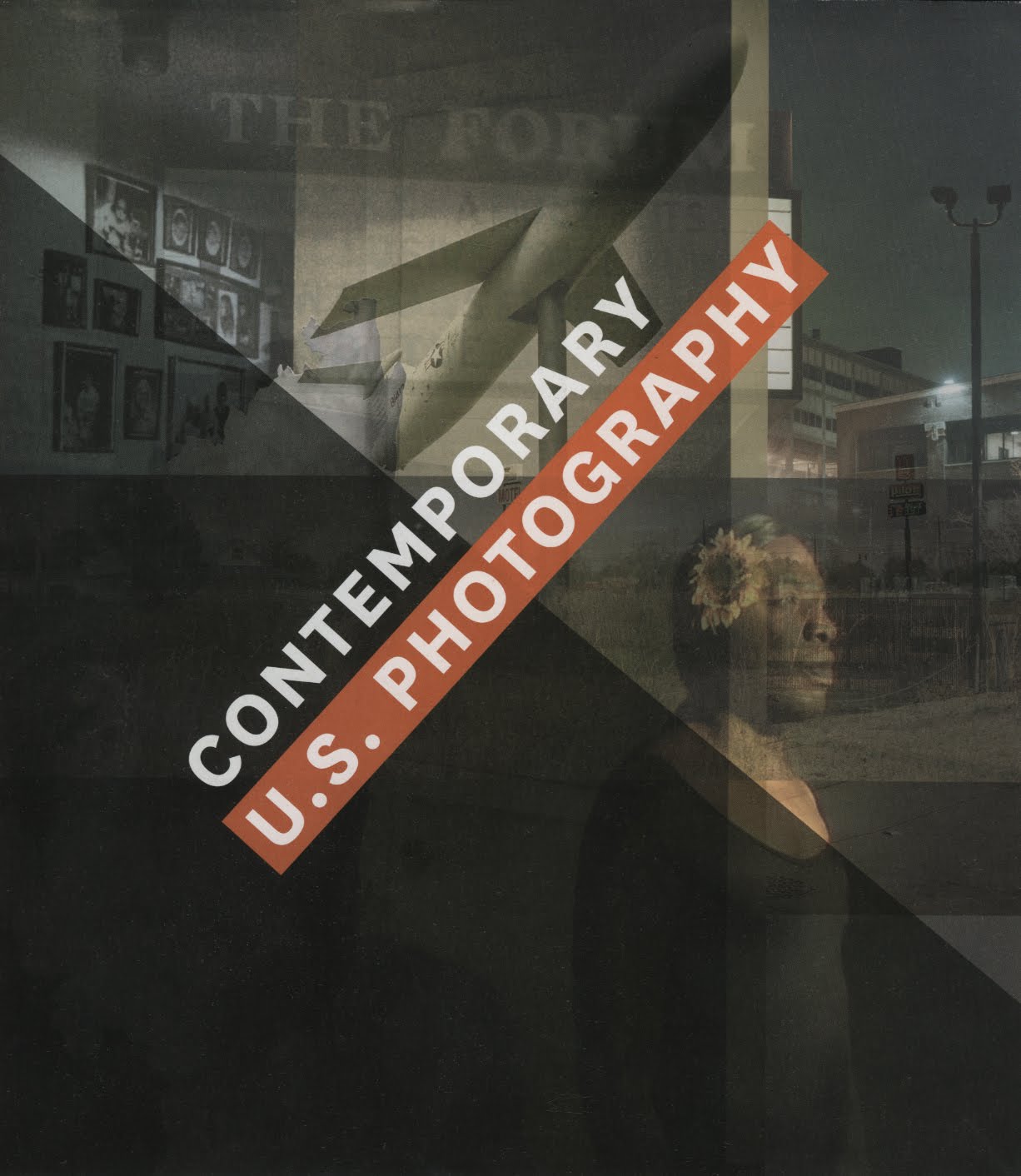
CONTEMPORARY U.S. PHOTOGRAPHY Catalogue


The FotoFest 2010 Biennial closes this weekend in Houston and what remains is a catalogue including five curatorial essays on the work in the exhibitions with an introduction by Charlotte Cotton.

The catalogue is available for purchase thru the FOTOFEST STORE and PHOTO-EYE BOOKSTORE.

Thank you to curator Aaron Schuman for his beautiful essay about the work in Whatever Was Splendid: New American Photographs. Four of my images (Bedroom, Teenage Boy, Couple Embraces, Winter Gas Station) were reproduced in the catalogue, and Aaron's insight into my own work was moving to say the very least.

Excerpt from Whatever Was Splendid: New American Photographs, page 38:

Finally, Tema Stauffer, who focused American masculinity and male adolescence in her portraiture series The Ballad Of Sad Young Men (2008), includes several such portraits within her broader and more extensive body of work: American Stills (1997-2009). Returning to the eclecticism of the first chapter of American Photographs, and under a similarly sweeping heading, Stauffer presents an assortment of sharply poetic observations of a country that at times can be angry, melancholy, brutal, and cold, but can also be enchantingly majestic and profoundly moving. Throughout the series there is a critical yet immensely forgiving sense of real compassion at work - a profound love for the subject, with all of its flaws - which strikes straight at the soul of the matter, in the most ordinary places and everyday moments. Rather than simply testifying to waste, selfishness, imminent collapse, and so on, Stauffer's Stills represent a truly committed and heartfelt attempt at unearthing the "splendid" from the "whatever" of contemporary America.

- Aaron Schuman

Monday, April 19, 2010

inMotion's 2010 Photography Auction and Benefit

I donated a large print of my White Horse photograph to inMotion's 2010 Photography Auction and Benefit taking place tonight at the Sheraton New York Hotel & Towers.

InMotion's annual Benefit raises vital, life-changing resources for thousands of New York City's most needy women and their families - a majority of whom are abused and many are immigrants. InMotion provides free legal services to women, primarily in the areas of matrimonial, family and immigration law.

Please see inMotion's website for more information about the organization: inMotion Justice for All Women

Wednesday, April 14, 2010

Douglas Britt reviews WHATEVER WAS SPLENDID for Houston Chronicle

Fotofest exhibit traces Walker Evans' legacy

One of the FotoFest 2010 Biennial's official exhibitions, Whatever Was Splendid: New American Photographs, explores parallels between Walker Evans' Depression-era photos and current lens-based U.S. work.

The unavoidable conclusion is that Evans casts a long, wide shadow over much of today's photography, luckily for us. It's not just that the nation has endured the worst recession since the period depicted in Evans' seminal 1938 book, American Photographs. It's that many of today's photographers — whose styles and subjects differ wildly from one another — are up to the same things Evans was, which isn't to say there's anything nostalgic about their work.

Aaron Schuman, founder of the online SeeSaw Magazine and the exhibition's curator, sets up the show by citing Lincoln Kirstein's introductory essay to Evans' monograph.

“(Evans) can be considered a kind of disembodied burrowing eye, a conspirator against time and its hammers,” Kirstein wrote. “Here are the records of the age before imminent collapse. His pictures exist to testify to the symptoms of waste and selfishness that caused the ruin and to salvage whatever was splendid for the future reference of the survivors.”

Photographers' eyes burrow through plenty of ruin today. For his Down These Mean Streets series, Will Steacy walks with a large-format-view camera from various cities' airports to their central business districts — always at night, with an emphasis on “neighborhoods you wouldn't want to be in at night; the parts of town you drive through — not to,” he says.

Steacy captures the signs of blight and neglect — a Philadelphia power plant looming over a crumbling neighborhood, a desolate Detroit housing project, the charred remains of a burned-out car in Los Angeles — with unwavering candor and, often, eerie beauty.
We see more thoroughly burned-out — and bombed and bullet-riddled — remains of cars in Richard Mosse's photographs following American soldiers in Iraq. And his photos and video of American soldiers lounging in the ruins of one of Saddam Hussein's former palaces — “whatever was splendid,” indeed — brilliantly straddle the line between wry humor and tragic grandeur.

Closer to home, Todd Hido burrows through ruin in the interiors of foreclosed suburban homes and, more dreamily, along rural roads, and Tema Stauffer's American Stills echo Evans' poetic portraits of everyday people and places.

More counterintuitive at first glance is Schuman's inclusion of work by Hank Willis Thomas and Jason Lazarus, both of whom work with other people's photographs to explore aspects of popular culture. But Schuman notes that American Photographs is “as much an interrogation of photography as it is of America, if not more so,” and Thomas and Lazarus update that exploration in fascinating ways.

For his Unbranded series, Thomas takes images from magazine advertisements featuring black Americans, often targeting them as consumers, and strips them of their copy and logos. His tactic highlights the stereotypes and assumptions behind the imagery. Because the same image can be disturbing, cheesy, poignant and hilarious all at once, the results are riveting.

Lazarus reversed Thomas' process, adding text instead of removing it while using amateur photos, not commercial ones. He asked various people, “Do you remember who introduced you to the band Nirvana?” and got them to write the answer with an anecdote on the back of a snapshot of that person. He then scanned, enlarged and framed the images and handwrote their responses on the prints' margins.

You might not think such a simple technique would pack much of a punch, but Lazarus' selection is unbelievably sweet — and often devastating. It shows how ordinary people, recording their memories, transform Nirvana's “well, whatever, never mind” mantra into something heartfelt, even splendid.

-Douglass Britt

Wednesday, April 7, 2010

culturehall as resource in arts education


Besides culturehall providing artists with a online space to display and promote their work, and the arts community a place to discover this work, David Andrew Frey and I envision the site increasingly utilized as a resource in arts education. We hope it will make a useful tool for educators to present contemporary artwork to students and to inspire written or visual assignments.

I experimented with the Digital Photo I class that I am currently teaching at William Paterson University by demonstrating how the site functions, as well as giving students a writing assignment based on work on the site. Since the class is examining portraiture and shooting portraits in a series of assignments this month, I asked them to write a paper based on a culturehall portfolio that contains photographic images of human subjects.

The photographers whose portfolios my students wrote about include: Dina Kantor, Mara Bodis-Wollner, Paolo Morales, Millee Tibbs, Heather Musto, Tiana Markova-Gold and Ayala Gazit.

Culturehall Assignment: Photographing the Human Subject

Please visit culturehall, an online resource for contemporary art. Use the browse link at the top of the homepage to locate the browse page. You can browse all works or be more specific in your search by browsing by genre or medium.

Locate a portfolio of photographic work including images of human subjects that are of interest to you. You might choose any of these genres of work: street photography, documentary photography of a single subject or a group of subjects, studio portraits, staged portraits, etc.

Please write a one-page paper addressing these questions:

Who is the subject, or who are the subjects, of the photograph or series of photographs?
What is the photographer’s relationship to the subject(s) as you perceive it?
How is the photographer using light? (Natural? Available? Flash? Studio?)
How is the photographer framing the subject(s)?
What mood does the photographer capture?
Does the work have any political content such as issues of race, class or gender?

Prepare to present your paper to the class along with a link to the selected portfolio that we will view as a group.

Wednesday, March 31, 2010

Interview on GRAYPIGEON


Maria and Yasmine
Austin, Texas
December 2009

A short set of interview questions I answered over the course of a few winter nights in January 2010 for GRAYPIGEON was recently published on their site. GRAYPIGEON describes itself as a social networking site whose sole purpose is to bring together a collective of artists. The site is under transition and will be relaunched with a new name at some point in the near future.

Q&A

Why do you do what you do?

I write and take photographs in order to search for a meaningful understanding and expression of life experiences and to participate in a dialogue with a community of peers who share similar passions and values. Being wired for a creative path often feels like a condition or affliction – it is inescapable. I can’t imagine a life for myself outside of the arts.

What are the works you are most happy with? Why?

If I were to choose one image that best represents my photographs of American spaces, it would be the White Horse. I spent a week in the winter of 2007 driving around Florida swamplands chasing an elusive dream and felt like I actually captured it in that image. I think some of the qualities that exist in much of my work – the quiet tension, melancholy, mystery and beauty – come through vividly in this photograph.

More recently, I have primarily been shooting portraits – the young men in Binghamton in the fall of 2008 and other subjects I have found since in Texas, Michigan and New Jersey. I’m specifically interested in searching for people whose lives exist on an edge and exploring their expressions, emotions and stories.

What themes are hot on your mind right now?

Love, loneliness, vulnerability, uncertainty, sexuality, dreams, broken dreams, internal and external struggles.

You seem to have your hands in just about everything. Highlight some of the things you are up to besides making photographs.

I teach photography courses at William Paterson University in New Jersey and The School of the International Center of Photography in New York. In addition to teaching, I work as a curator for an arts website called culturehall founded by artist and curator, David Andrew Frey. culturehall is a curated online resource for contemporary art where selected artists can share their work with curators, gallerists, collectors and other artists. My role has been to invite artists, feature and write about their work, and build our list of resources that includes international blogs, websites and organizations devoted to the arts. The goal of the site is to build a sense of community amongst artists, promote their exhibitions and events, and provide greater exposure for their work. It’s a great job for me because I thrive on developing relationships with other artists and supporting work that I think merits attention. I also participate in online discussion of the arts and share personal work-in-progress through my own blog, PalmAire.

Why do you teach? Does it help you as an artist?

Teaching is one of the most rewarding ways I can make a living in the arts. I love teaching. Teaching is about communicating ideas and forming relationships with students. It gives my life more structure and purpose. It motivates me to be more informed, organized and articulate. I like the kind of conversations that transpire in critiques, and it is satisfying to watch students develop an enthusiasm for photography and grow in their work.

How would you describe the process through which a talented young artist achieves professional and financial success? Is that even the goal?

Professional success, understood as visibility and accomplishment in the art world, doesn’t necessarily lead to financial success. Most of my peers, even those who have achieved some substantial recognition for their work, are still struggling to make a living as artists. As far as I can tell, professional success comes from a combination of talent, hard work, commitment, perseverance and a supportive community. Financial success is exceptional. Artists who recognize and utilize the power of the Internet as a forum for networking, promotion and creative expression are probably more likely to receive exposure and succeed in their careers.

I recently finished reading the biography and journals of John Cheever which describe the financial challenges of one of America’s great writers even while his stories were regularly being published by The New Yorker. Making art tends to cost more than writing, and many visual artists whose work is shown in respected galleries often spend more on the expenses of producing work than they receive from sales of the work, especially during the current economic climate.

Developing a career in the arts is a tough path and one that requires a great deal of sacrifice and endurance. The majority of artists I know support themselves through teaching or other jobs related to the arts – and those jobs are competitive as well.

Any gallery shows or events you’d like to talk about?

I will be exhibiting thirteen photographs – made from 1997 thru 2008 – in a group show called Whatever was Splendid at the Houston Fotofest Biennial opening in March 2010. The show, curated by Aaron Schuman, explores the influence of Walker Evans on contemporary American photographers. Walker Evans has been a significant figure in shaping my understanding of who and what is worth photographing, and it will be interesting to have my work viewed in that context. Other participating photographers include Will Steacy, Michael Schmelling, Greg Stimac, Jason Lazarus, Jane Tam, Richard Mosse, Craig Mammano, Todd Hido, Hank Willis Thomas and RJ Shaughnessy.

Tuesday, March 23, 2010

I Met a Unicorn


Unicorn
Austin, Texas
copyright Barry Stone

Since I couldn't make it to Texas (and I'm just about over that now), I'm happy to report that Texas is coming to me. Well, not just me. Good friend and photographer Barry Stone is exhibiting seven photographs in his third solo exhibition at Klaus von Nichtssagend Gallery opening Friday March 26th. Originally from Texas, Barry spent some years in New York teaching at the ICP. He currently lives in Austin near my favorite place to swim, Barton Springs, and teaches at Texas State University in San Marcos. Barry is also the author of a beautiful photo blog, YES YES YES, as well as a new blog specifically devoted to images of Texas, O EMPIRE WIDE AND GLORIOUS.

According to the press release for this upcoming exhibition of his recent work:

Barry Stone employs a wide variety of practices as a means of generating singular images. His approach includes "straight" photography, rephotographing, computer-rendering, and manually reworking, and does not value one method above another. Instead, Stone takes an egalitarian view of image-making. At a time when an explosion of photographic imagery can seem to dilute the medium to an infinite stream of information, Stone displays a considered selection which exemplifies his varied approaches. Through the seven photographs, he has slowed the eye to focus on points within his photographic practice.

In two photographs—one of a "unicorn" at a children's party, the other of a woman pointing her digital camera at a sunset—the conceptual focus of the image is enclosed in the framing of a scene observed by Stone through the lens of his camera. Another work in the show is a rephotographed image of an oil painting, an image within an image. In a third piece, Stone employs the conceit of the self-referential image again by spray-painting an arc on a photograph of a corner space and rephotographing, collapsing the pictorial space back into abstract elements.

The image Alan Greenspan as a Rainbow in Washington D.C. on October 23, 2009, 12.20.2009 was created by sampling the colors of a Washington Post press photograph of Greenspan testifying in front of the House Oversight and Government Reform Committee and creating a gradient rainbow from those colors, a nod to the connection between photography and currency, neither of which is tied to a gold standard that delineates a definitive value.

Stone's photographs deal with the problems of description in photography, and can reflect our perceptions of reality as we acknowledge the factors which inform their production and interpretation.His aesthetic in this regard is as indebted to the language of painting as it is to the language of advertising as it is to capitalist production.

I Met a Unicorn
Barry Stone

Klaus Von Nitchtssagend Gallery
438 Union Avenue
Brooklyn, NY

March 26 - April 25
opening reception Friday, March 26, 7 - 9pm

Monday, March 15, 2010

Telegraph features WHATEVER WAS SPLENDID

Telegraph (UK) features WHATEVER WAS SPLENDID: NEW AMERICAN PHOTOGRAPHS, curated by Aaron Schuman. The feature closes with this powerful commentary:

As much as Evans’s precedent has provided both the inspiration and reinforcing framework for this exhibition, WHATEVER WAS SPLENDID is first and foremost the manifestation of the intelligence, ingenuity, and multiplicity of voices and visions that can be found within current US photographic practice. Yet consciously or not, all the photographers represented here have, in their own distinct ways, expanded upon many of the themes, strategies, clues, symbols, ‘certain sights, [and] certain relics of American civilization past or present’ first glimpsed in American Photographs. They all inherently possess a somewhat familiar ‘burrowing eye’, and share a determination to record, testify, and salvage what they can of their own precarious age for its survivors. And just like Evans, they have both reinvigorated American photography and redefined their country—conceptually, aesthetically, culturally, politically, historically, photographically, and so on—within very contemporary terms, celebrating both the United States and its photography, as Kirstein put it, ‘with all [its] clear, hideous and beautiful detail, [its] open insanity and pitiful grandeur.’

Please see the full feature: Whatever was splendid: New American Photographs

And a slide show of selected works from participating photographers: Whatever was splendid: slideshow

Aaron Schuman has kindly sent me shots of the installation of some of the work that I contributed to the exhibition.


Saturday, March 13, 2010

Arriving from Texas ...


While I was home emailing my pen pals and trying not to feel too terrible about the fact that I couldn't make the trip to Houston for the opening of Fotofest last night on account of my often terrifying state of being financially stuck, I received this very sweet and pretty hilarious snapshot of the installation from photographer Carolyn Monastra. In between the women on the bench and the gang at the Minnesota State Fair on the wall, that is photographer Dana Miller on the left, who I met and exhibited work with along with Mara Bodis-Wollner in the inaugural opening of Jen Bekman Gallery in 2003. Keep your fingers crossed for me that my life can become less virtual one of these days.

Friday, March 12, 2010

Houston Fotofest 2010 Biennial


Thirteen photographs I made between 1998 - 2008 are included in an exhibition at Vine Street Studios, one of five exhibitions in the Fotofest 2010 Biennial in Houston, Texas opening tonight. Whatever Was Splendid: New American Photographs explores the legacy and continued influence of Walker Evans on contemporary American photography. The exhibition was curated by Aaron Schuman - a photographer, writer, lecturer, curator and founder/editor of SeeSaw Magazine. Other participating artists are Will Steacy, Michael Schmelling, Greg Stimac, Jason Lazarus, Jane Tam, Richard Mosse, Craig Mammano, Todd Hido, Hank Willis Thomas and RJ Shaughnessy.

Also at Fotofest is an exhibition, Road to Nowhere?, including work by one of the contemporary photographers whose spirit I admire the most, Victoria Sambunaris. I had the opportunity to meet Vicky earlier this fall before she left on a long journey to make new photographs in the southwestern region of the United States which finally winds down in a couple of weeks. Her beautiful and politically-charged images of the American landscape will be shown along with work by an exceptional group of American photographers: Sheila Pree Bright, Jeff Brouws, Tim Davis, Myra Greene, Eirik Johnson, Jason Lazarus, An-My Le, Nic Nicosia, David Oresick, Trevor Paglen, Greta Pratt, Michael Robinson, Jason Salavon, Christina Seely, Paul Shambroom, Greg Stimac and Brian Ulrich. Road to Nowhere? was curated by Natasha Egan, Associate Director and Curator of the Museum of Contemporary Photography in Chicago.

For a complete list of Fotofest exhibitions, please see: Fotofest 2010 Biennial

Tuesday, March 2, 2010

March Photo Frenzy


copyright Deana Lawson

Sway
Station Independent Projects
Scope Art Fair NYC, booth A30
March 4-7

Exhibiting Artists: Juliana Beasley, Brian Getnick, Miles Ladin, Deana Lawson, Leah Oates, Ruben Natal San-Miguel, Kari Soinio and Pierre St-Jacques

******

The Concrete Jungle
Ruben Natal- San Miguel
Kris Graves Projects
111 Front Street #224
DUMBO
March 4 - April 10
Opening reception: Thursday, March 4, 6 - 9pm

******

At Sea
Dan Estabrook
Daniel Cooney Fine Art Gallery
511 West 25th Street, Suite #506
New York, NY
March 1 - April 24
Opening reception: Thursday, March 4
Lyle Rexer in Conversation with Dan Estabrook: Saturday, March 6, 4pm

******

31 Women in Art Photography
Humble Arts Foundation
Affirmation Arts
523 West 37th Street
New York, NY
Opening reception and dance party: Saturday, March 6, 6 - 9pm

Exhibiting Artists: Erica Allen, Amelia Bauer, Claire Beckett, Gilda Davidian, Jessica Eaton, Naomi Harris, Carmen von Kende, Anna Krachey, Yvonne Lacet, Erika Larson, Jessica Mallios, Alison Malone, S. Billie Mandle, Paula McCartney, Rachel Mozman, Yamini Nayar, Sarah Palmer, Kristine Potter, Heather Rasmussen, Justine Reyes, Lisa Robinson, Irina Rozovsky, Sasha Rudensky, Victoria Sambunaris, Robin Schwartz, Emily Shur, Bea Shouders, Rachel Sussman, Kirsten Kay Thoen, Carson Fisk-Vittori and Ann Woo


copyright Ruben Natal-San Miguel

Monday, March 1, 2010

NYMPHOTO Art For Haiti Auction


I have donated a small print of the cars in the desert above to NYMPHOTO Art for Haiti: Benefit Print Auction. Proceeds from the auction will support the relief effort through Partners in Health, a non-profit organization that has established 12 medical facilities in Haiti.

Other work in the auction has been donated by Keliy Anderson- Staley, Nina Busing Corvallo, Jeff Cate, Rona Chang, Cameron Goodyear, Candace Gottschalk, Laura Heyman, Geoffrey Hutchinson, Hee Jin Kang, Michelle Kloen, Yijun Liao, Minette Lee Managhas, Tiana Markove-Gold, Stephen Meierding, Maria Passaroti, Suzanne Revy, Jon Shireman, Emily Shur, Brea Souders, Juliana Swaney, Jane Tam, Hidemi Takago and Jennifer Williams.

Please preview the artwork here: ART FOR HAITI

Bids on work can be placed on ebay: PRINT SALES TO BENEFIT PARTNERS IN HEALTH

Wednesday, February 24, 2010

culturehall feature 38: INSIDE OUT


Some of the most compelling bodies of work in the history of documentary photography reveal characters so vivid that they live in our imaginations almost as though we know them: Diane Arbus’ giant towering over his parents, Robert Frank’s lonesome American strangers, Larry Clark’s heroin-addicted teens in Tulsa, Nan Goldin’s vast circle of bohemian friends and lovers, Richard Billingham’s inebriate father and brawny mother. In this highly personal and subjective tradition, culturehall presents four contemporary photographers with a similar sensitivity to the struggles, fantasies and realities of diverse groups of people whose lives have resonated with the photographers’ psychologies, personal histories, cultural backgrounds or social concerns.

Like many of the portraits of mentally ill and/or alcoholic subjects in her project, Last Stop: Rockaway Park, Juliana Beasley’s recent photographs of people in Sete, a town on the southern coast of France, are intimate and searing. Shot during a residency organized by CeTaVoir and published in a monograph scheduled for release this spring, Beasley’s images portray the cast of characters who populate this Mediterranean fishing port at the summer’s end. Searching the beaches and making her way into homes and social centers, the photographer gets close to her subjects to reveal their flesh, their wounds and their gazes in the stark light of her flash. Her teenagers are awkward or defiant, sunburnt and self-destructive. Beasley’s photographs remind us that, wherever we retreat or congregate, we are vulnerable and mortal.

Born in Taiwan, Wayne Liu divided his early years between his native country and the United States. He moved to New York City after his first year of college and shot his first photographs in the streets of Chinatown. Liu cites films at the Film Forum and Anthology Film Archives, street photography of American and European photographers, and books he discovered as an employee of the Strand Bookstore as influences on his artistic practice. In 2008, Liu travelled on buses through big cities and the countryside of China, parts of which were ravished by an earthquake. His series of black and white photographs, OK China, resemble stills from a grainy film noir. The drama of these dreamlike and melancholic images of anonymous strangers in motion or repose is further enhanced in the darkroom through a painterly process in which Liu burns in deep blacks and highlights specific areas of his prints.

Heather Musto began photographing Anna as a one-year-old in the year 2000. As her babysitter, Musto developed an intimate bond with the child and her extended family living in a blue-collar town in northern New Jersey. Over the course of seven years, she documented the domestic life and emotional bonds of her subject as her family members struggled with addiction and financial instability. While Anna’s parents and relatives appeared and disappeared in her life, her grandmother, a caretaker and licensed nurse, provided a home for the young girl. The photographer conveys an unsettling reality of a childhood through her honest and unflinching snapshots, but not without attention to Anna’s essential spiritedness and the efforts of adults to love and care for her. Musto’s own empathy underlies her commitment to connect with Anna both as a photographer and as a friend.

In his series, Prairieland, Chicago-based photographer Dave Jordano has explored the relationship between the land and the people of rural Illinois. His portraits describe people who exist on the fringes of mainstream culture as a result of their choices, isolation or economic hardship. Some of his inhabitants are dreamers, drifters or eccentrics, like Doris with her white dog and white fur coat. Some long to escape, to be picked up on the road and taken to a better place; others seem resigned, content or proud to be who and where they are. The accomplishment of Jordano’s best portraits lies in his gift for capturing subjects who are simultaneously individualistic and iconic of characters throughout Middle America.


Junkie Camper, by Juliana Beasely


from OK China/the Past is a Foreign Country, by Wayne Liu


Doc holding Anna with orange popsicle, by Heather Musto


Doris and White Cloud, Wateska, Illinois, by Dave Jordano

Monday, February 15, 2010

culturehall at the School of Visual Arts


I joined David Andrew Frey for a presentation this afternoon about culturehall to students in Michelle Leftheris' graduate class, Colloquia of Moving Images, at SVA. David described how he arrived at the idea of creating the site, and we both discussed how the site operates, how it is evolving, how we curate work and the role of the Web in promoting artists - topics we will also address in some upcoming interviews.

We are excited to have two new interns working for culturehall, Nikolai Shveitser and Rhiannon Platt, and more on board soon. Students are welcome to contact us for additional internship opportunities.

Thursday, February 11, 2010

Interview on Two Way Lens


Christian
Paterson, NJ
December 2009

I was recently interviewed by German photographer Michael Werner for a project on his blog, Two Way Lens. Two Way Lens features an interview series with contemporary photographers in an effort to inform and inspire emerging photographers who are interested in developing careers in photography. It includes interviews with artists Alec Soth, Amy Stein, Zoe Strauss, and Richard Renaldi, among others.

Michael asks each photographer the same three questions. Despite whatever neurosis and insecurities these kinds of questions drag up for me, I tried my best to come up with some simplified answers and to sound a little saner than I feel most of the time.

You can find the interview below or an illustrated version on Two Way Lens: Interview with Tema Stauffer on Two Way Lens

Also see more of my images on Michael's personal blog: The Truth of Beauty

MW: What inspired you to start taking photographs, and what is the primary inspiration for you to keep working in this field?

TS: I spent much of my childhood with my head buried in books or roaming my neighborhood for adventures and places to daydream. I collected baseball cards and wore cowboy shirts and pitched tents in my backyard.

Most of my friends were boys or tomboys. I was a thief for a while and stole coins from my mom’s purse and candy from the corner store. I took naps on the branch of a lilac tree and cried when I read That Was Then, This is Now by S.E. Hinton.

I was fascinated with stories and was determined to invent my own path. Among some of my early fantasies of what I might be when I grew up were a writer, an artist and the leader of a motorcycle gang.

My mother enrolled me in my first photography class at an art center while I was in high school. I took pictures of my friends in fields and cemeteries and jumped out of the car with my camera for the right stranger on the street - someone who looked as restless as I felt.

Photography was license for adventure and storytelling. I liked it even more than drawing, painting and practicing my violin. Taking pictures gave me an adrenaline rush. Photography was sexy and subversive.

If you merge a writer, an artist and the leader of a motorcycle gang, you might come up with someone who explores people and places in America and returns to a Brooklyn railroad apartment to share photographs and thoughts about those experiences. I love driving and searching. I also love nesting with a keyboard and a computer screen.

Photography transforms how I look at the world. Things that are sad, mundane, ugly or beautiful become more interesting and poignant. Both taking pictures and writing stimulate and deepen my perception of reality. I become more engaged in my experiences and capable of reflecting on the most difficult ones. If I stopped taking pictures and writing, I am sure my world would fall flat.

MW: In your opinion and experience, how can emerging photographers evaluate themselves as ready to start promoting their works and seek a broader exposure for their photographs? What is one vital action you would recommend photographers undertake to find their audience, be included in exhibitions, and gain professional representation?

TS: During my twenties, I was involved in a number of shows organized by peers in alternative art spaces. We were eager to show work and commercial galleries seemed out of our reach. Shortly after I finished graduate school, I curated an exhibition of work by twelve photographers at a warehouse space known as The Butcher Shop in Chicago. This kind of show was good practice for resolving work, getting feedback and building relationships with other artists. My first exhibition in New York was organized by a collective of women photographers called NYMPHOTO in a loft in Manhattan, which led to a series of exhibitions at Jen Bekman Gallery.

Artists develop their careers in part through their involvement in a community. Going to openings, supporting other artists, recognizing where one’s work fits in, looking for mentor figures and reaching out for advice are all important steps in this process. I wrote to a number of artists and writers whose work I admire, often with the result of forming lasting relationships.

The Internet has expanded the notion of an arts community, and it is critical for young artists to make their work visible in this environment. One of the most important steps I took was starting a blog, PalmAire, which gave me a place to share work-in-progress and develop my thoughts about photography and the photo community. Many of my opportunities have arisen organically through personal contacts and exposure on the Internet. My relationship with Daniel Cooney, who is currently representing my work, resulted from a friend mentioning my name to him and Daniel discovering portraits on my blog.

The efforts I made to write about photography on my blog furthermore led to a position for an arts website called culturehall, whose mission is to support the careers of a community of artists. culturehall is an online resource where selected artists can share their work with curators, gallerists, collectors and other artists. My role as a curator gives me the opportunity to help artists create online portfolios of work and promote their exhibitions and events. culturehall’s director, David Andrew Frey, and I also invite guest curators to bring artists to the site and write about their work.

MW: How did it come about that you achieved the status of successful, professional photographer? What steps were involved in reaching your level of success?

TS: When I first read this question, I laughed out loud and squirmed a little. The notion of a “successful, professional photographer” conjures a mythic figure with a studio, fancy cameras, interns, magazine assignments, and a substantially greater income. Of course there are many versions of a successful, professional photographer, but still, it isn’t the most appropriate definition for me.

It is more accurate to describe me as an artist and teacher whose life is deeply invested in the arts community. What constitutes “success” is subjective. I am driven and passionate about the arts, and my efforts and involvement have lead to some significant exhibitions, recognition from my peers, and a relationship with a great gallery, which are some of the most satisfying forms of success.

On a day-to-day basis, I feel acutely more aware of my “struggle” than my “success.” Feelings of accomplishment are rewarding but also fleeting. When the high of one accomplishment fades, it creates an opportunity to work through a set of more challenging feelings towards the next one. For most artists, developing a career in the arts is a series of small steps over a long period of time. It demands the ability to experience rejections, creative blocks, financial constraints, self-doubt and anxiety. And then to brush off the dust, strategize, produce work and move forward.

Family, close friends, therapy, swimming, biographies of artists and writers, steady correspondence and supportive relationships with other artists are crucial to my own survival. I think there is good karma in helping others and I try to keep that principle at the forefront of my relationship to the art world.

Tuesday, February 2, 2010

Tim and Amy


copyright Tim Briner

Tim Briner and Amy Stein will giving a discussion this Saturday at Daniel Cooney Fine Art about Tim's current exhibition, Boonville, exploring small town America through nineteen beautifully rendered black-and-white photographs.

Tim Briner in Conversation with Amy Stein
Saturday, February 6 at 4pm

Daniel Cooney Fine Art
511 West 25th Street, #506
New York, NY

Monday, January 18, 2010

Dreamers


Frye
Dreamers Adult Video Store
Austin, TX
Christmas Day, 2009

I stopped to take photographs in the parking lot of Dreamers, and it felt serendipitous that Frye got out of his car and happily agreed to step into the picture. Thank you for making my Christmas Day. Frye told me that he was a DJ in a strip club in Dallas and he was in Austin for the night. He was as spontaneous and likable as they come and tried on different outfits that he pulled from his car. It felt like we could be friends - like we were friends.

Frye is the first person I have photographed to invite me to be his friend on facebook. Welcome to my neurotic world of facebook, Frye. Is yours as compulsive, voyeuristic, riddled with temptation and torture as mine? Who and what do you spy on? What landmines lie in your past and present, occupying this single space?

Until we meet again in Texas, let's stay in touch here. Let's be less alone together. Let's hope each other's dreams come true. Let's take care of each other when they don't.

Saturday, January 16, 2010

culturehall seeks intern


David Andrew Frey and I are searching for an intern to assist us with upcoming research and development projects for culturehall. This is a good opportunity for a graduate or undergraduate student in art administration to gain experience in promoting the arts. Please pass this information along to potential candidates who might be interested in this internship position.

Internship description:

culturehall seeks a motivated individual to assist in the development of key programs over the next several months. The successful candidate will possess strong writing skills, a keen eye for detail and punctuality regarding deadlines. Intern will assist with research and marketing. Will possibly need to assist with New York-based events. Work will largely take place offsite, with a weekly phone conference and in-person meeting every two weeks. Expected workload will require 8-12 hours per week. Candidate is responsible for offsite access to a computer and the Internet. Internship is unpaid, however culturehall is happy to assist with college credits.

About culturehall:

culturehall is a curated online resource promoting contemporary artists. Our members are generally emerging professionals who have completed a graduate studies or equivalent program. culturehall members are actively showing in New York and around the world.

Please see our website at: www.culturehall.com

Please submit resumes to Tema Stauffer: tema@culturehall.com

Wednesday, January 13, 2010

NYMPHOTO curates culturehall


Mom and Her Boyfriend Mr. Art
2005
copyright LaToya Ruby Frazier

Thank you to NYMPHOTO founders, Nina Corvallo and Candace Gottschalk, who selected the work of four female photographers for the current Feature Issue 35 on culturehall. NYMPHOTO is a collective of women photographers whose members maintain the NYMPHOTO Blog, sharing news and issues relating or relevant to women in photography.

For their culturehall feature, Framed, Nina and Candace choose work by Sara Appelgren, Andrea Chung, LaToya Ruby Frazier and Tiana Markova Gold.

Culturehall featured artist, LaToya Ruby Frazier, will present her work, ideas and concerns as part of a lecture series presented by the International Center of Photography. LaToya's current work is a collaboration between herself and her family which acts both as portraiture and social document. Her lecture takes place on February 3rd at 7pm at the ICP.

Sunday, January 10, 2010

Melanie


Melanie
Brooklyn, NY
January 2010

January brought a surprise visit from an old and dear friend, costume designer Melanie Ree. Melanie and I met in Minneapolis in May of 2003 and those wicked sexy eyes of hers cast a spell on me - perhaps you can see why. Now almost seven years later, we are keeping warm in my Brooklyn apartment - drinking pots of coffee and watching movies and sharing stories about our similarly rocky love lives (sometimes ex's make the best friends ever). Melanie brought with her from Minnesota a black wig, blonde wig, fur coat, fur cap, sunglasses and two suitcases full of accoutrements. Like everyone who holes up here for a while, she got her picture taken by the kitchen window, the only place where there is a stream of light.

Please see some of Melanie's wild and one-of-a-kind corsets, couture and fashion on her website: www.seamstrix.net

Wednesday, January 6, 2010

January Exhibitions


copyright Tim Briner

Tim Briner
Booneville

Daniel Cooney Fine Art
511 West 25th Street, Suite #506
New York, NY

January 7 - February 27
Opening Reception: Thursday, January 7, 6 - 8pm


Versus
curated by Ruben Natal-San Miguel

Hous Projects
31 Howard Street 2nd Fl
New York, NY

January 7 - March 8
Opening Reception: Thursday January 7, 6 - 10pm

Participating Artists: Brian Ulrich, Alex Leme, Mickalene Thomas, Nadime Rovner, Hank Willis Thomas, Cara Phillips, Amy Elkins, Molly Landreth, Matthew Pillsbury, Kris Graves, Phil Toledano, Elizabeth Fleming, Zoe Strauss, Ruben Natal San-Miguel, Jen Davis, Eric Ogden, Michael Wolf, Gina Levay


copyright Wayne Liu

New Photography:
Selections from the 2008 - 2009 CCNY Darkroom Program

The Camera Club of New York
336 West 37th Street
New York, NY

January 7 - February 20
Opening Reception: Thursday January 7, 6 - 8pm

Participating Artists: Brett Bell, Lisa Elmaleh, Anthony Hamboussi, Carrie Levy, Wayne Liu, Santiago Mostyn, Mauro Restiffe, Emma Wilcox

Wednesday, December 30, 2009

Ruben Natal-San Miguel curates culturehall


Adultry
2009
copyright Alex Leme

Thank you to one of contemporary photography's greatest enthusiasts, Ruben Natal- San Miguel, who worked tirelessly though the holidays towards curating an upcoming exhibition, Versus, opening on January 7th at Hous Projects, as well as our current Feature Issue 34 on culturehall. David Andew Frey and I asked Ruben to suggest four photographers for us to invite to submit portfolios to the site. He selected work that he felt communicated strong messages and reflected the direction of the medium in the new year.

Please visit culturehall to see new portfolios by Alex Leme, Gina Levay, Matthew Pillsbury and Carlo van Der Roer.

More of Ruben's steady stream of thoughts and passions can be found on his blog: ARTmostfierce

Tuesday, December 22, 2009

Leaving for Austin


Mustang Jewelry & Pawn Shop
Austin, TX
July 2009